
FG Clears NNPC’s Legacy Debts, Resets Federation Accounts Amid Deepening Revenue Strain

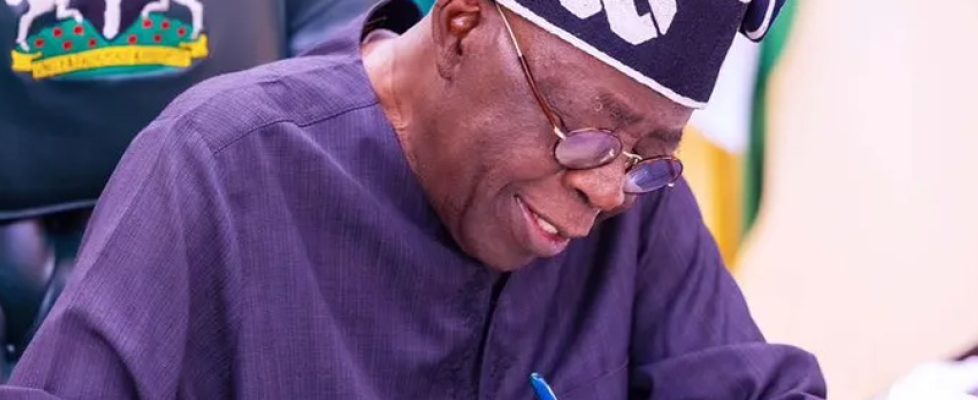
Nigeria’s fiscal landscape has entered a new and consequential phase following President Bola Tinubu’s approval of a sweeping write-off of legacy debts owed by the Nigerian National Petroleum Company Limited (NNPC Ltd) to the Federation Account. The decision effectively wipes out the bulk of obligations accumulated over several years, closing a chapter marked by persistent disputes, reconciliations, and opaque accounting between the national oil company and federal revenue managers.
Yet, while the move brings temporary clarity to historical balances, it also throws into sharp relief deeper structural problems in revenue mobilisation, transparency, and the sustainability of public finances in Africa’s largest oil producer.
A long trail of disputed balances
For years, outstanding obligations owed by NNPC to the Federation Account have been a recurring flashpoint at meetings of the Federation Account Allocation Committee (FAAC). These debts—arising largely from crude oil liftings, royalties, and joint venture arrangements—were repeatedly reported, revised, and challenged, often without a definitive resolution.
At the October 2025 FAAC meeting, the Nigerian Upstream Petroleum Regulatory Commission (NUPRC) reported that NNPC Ltd owed the Federation $1.48bn and N6.33tn, covering Production Sharing Contracts, Direct Sale Direct Purchase arrangements, Modified Carry Agreements, Royalty Adjustments, and Joint Venture royalty receivables.
These figures, however, were never universally accepted as final. Multiple reconciliation efforts over the years highlighted discrepancies between NNPC’s internal records and those of regulators and revenue agencies, fuelling mistrust among federal, state, and local governments that depend heavily on monthly FAAC disbursements.
Presidential intervention and reconciliation outcome
The latest development followed the work of the Stakeholder Alignment Committee on the Reconciliation of Indebtedness between NNPC Ltd and the Federation. After reviewing records up to December 31, 2024, the committee submitted its findings to the Presidency, recommending that most of the disputed balances be removed from the Federation’s books.
President Tinubu’s approval authorised the cancellation of about $1.42bn and N5.57tn out of the previously reported debts. In practical terms, this means that roughly 96 per cent of the dollar obligations and 88 per cent of the naira liabilities were written off.
The NUPRC confirmed that it has already effected the directive, passing the necessary accounting entries and formally adjusting the Federation Account to reflect the cleared balances.
Why the write-off matters
The debt cancellation represents more than a bookkeeping exercise. It effectively resolves a long-running legacy issue that has complicated federal revenue planning and intergovernmental relations. By clearing disputed historical obligations, the government aims to create a cleaner baseline from which future remittances can be tracked more transparently.
For state governments, many of which have complained that unresolved NNPC debts depress monthly allocations, the move provides some certainty—even if it does not immediately translate into higher revenues.
However, critics argue that wiping off debts without corresponding cash inflows raises questions about opportunity costs, especially at a time of mounting fiscal pressure, rising public debt, and growing social spending needs.
New debts, familiar concerns
Despite the cancellation of legacy balances, the problem of outstanding obligations has not disappeared. The NUPRC disclosed that statutory liabilities arising between January and October 2025 still stood at $56.81m and N1.02tn.
Although $55m was recovered during the month under review—leaving a modest dollar balance of $1.8m—the sizeable naira component remains unpaid. These figures underscore that while the past has been partially settled, current operational liabilities continue to accumulate.
The commission insists that these newer obligations are being actively monitored and will be recovered in line with statutory timelines, but the pattern mirrors earlier cycles that eventually produced the now-cancelled legacy debts.
Revenue targets missed, gaps widening
Perhaps more troubling than the debts themselves is the broader revenue performance of the upstream sector. Data from the same NUPRC report show a sharp shortfall in collections relative to projections.
In November 2025, the commission collected N660.04bn, far below the approved monthly target of N1.204tn. Royalties—the backbone of upstream revenue—were especially weak, with actual collections of N605.26bn against a projected N1.144tn.
Cumulatively, by the end of November, total approved revenue stood at N13.25tn, while actual collections amounted to just N7.60tn, leaving a gap of N5.65tn. Royalty revenues alone accounted for N5.63tn of that shortfall.
The figures also reveal a downward trend, with November collections falling significantly below October’s N873.10bn, raising concerns about production levels, pricing dynamics, compliance, and enforcement effectiveness.
Old audit battles refuse to die
The debt write-off has also revived attention on an even larger and more contentious issue: the alleged $42.37bn under-remittance to the Federation Account between 2011 and 2017, flagged by Periscope Consulting in an audit commissioned by the Nigeria Governors’ Forum.
NNPC Ltd has flatly rejected the findings, maintaining that all revenues for the period were properly accounted for. Periscope Consulting, on the other hand, insists that its audit uncovered substantial gaps that remain unresolved.
Caught between both positions, FAAC has ordered a joint reconciliation session, but officials acknowledge that the process remains unfinished—a reminder that Nigeria’s oil revenue disputes often span decades.
Structural roots of the problem
Industry experts say these recurring controversies are symptoms of deeper governance failures. Professor Emeritus of Petroleum Economics, Wumi Iledare, has described the situation as a “legacy problem” rooted in the pre–Petroleum Industry Act (PIA) era, when NNPC simultaneously acted as operator, regulator, and revenue collector.
Such overlapping roles, he argues, made transparent reconciliation almost impossible. Although the PIA has since separated these functions and corporatised NNPC Ltd, analysts warn that institutional habits and weak enforcement still undermine the reform’s full impact.
International scrutiny and reform promises
Global institutions have also kept Nigeria’s oil revenue management under scrutiny. The World Bank has repeatedly accused NNPC Ltd of incomplete remittances, noting that even after the removal of petrol subsidies, only about half of the resulting revenue gains have been transferred to the Federation Account.
According to the Bank, out of roughly N1.1tn in crude sales and related income in 2024, only N600bn was remitted, with the balance reportedly used to offset past arrears—an explanation that continues to fuel debate.
NNPC Ltd’s management, led by Group Chief Executive Officer Bayo Ojulari, has pledged to prioritise transparency, efficiency, and accountability. Observers say the credibility of these promises will be judged less by statements and more by consistent, verifiable remittance patterns.
A reset, not a resolution
Ultimately, the presidential approval to cancel NNPC’s legacy debts marks a significant reset in Nigeria’s fiscal accounting. It clears the slate of disputed historical balances and offers an opportunity to rebuild trust in the management of oil revenues.
Yet, with fresh debts accumulating, revenue targets repeatedly missed, and old audit disputes unresolved, the write-off may prove to be only a pause rather than a full stop. Whether this reset leads to lasting reform—or merely postpones the next round of controversies—will depend on how rigorously the new petroleum governance framework is enforced in practice.


