
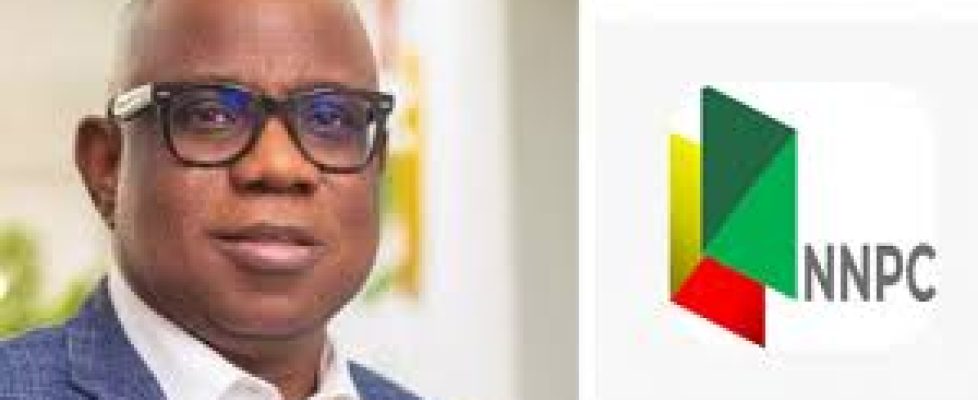
Fuel Price War Will Benefit Nigerians — Bayo Ojulari

Nigeria’s downstream petroleum sector is undergoing a historic reset as aggressive price competition reshapes fuel pricing, supply chains and consumer access. The Group Chief Executive Officer of Nigerian National Petroleum Company Limited (NNPCL), Bayo Ojulari, says the ongoing fuel price war will ultimately favour Nigerians, despite short-term disruptions across the market.
Speaking after briefing President Bola Tinubu in Lagos, Ojulari described the current tension as a necessary transition from decades of fuel import dependence to a domestically driven, competitive refining market.
Competition pushes petrol prices down
Ojulari said the sharp fall in petrol prices reflects how deregulation and competition work in practice, stressing that consumers always benefit when multiple suppliers compete for market share.
Petrol prices, which exceeded ₦1,200 per litre in late 2024, have dropped to as low as ₦739 per litre in December 2025, driven largely by competition between Dangote Refinery, NNPCL retail outlets and independent marketers.
According to the National Bureau of Statistics, the average retail price of Premium Motor Spirit declined by ₦153 per litre year-on-year, supported by improved supply and domestic refining capacity. Dangote Refinery alone implemented over 20 price adjustments in 2025, forcing other operators to respond or lose customers.
Ojulari noted that while the price war has created pressure for marketers, it signals a healthier and more transparent market structure.
PIA redefines NNPCL’s commercial role
Ojulari clarified that under the Petroleum Industry Act (PIA), NNPCL no longer regulates fuel prices or the downstream market. Instead, the law separates regulation from commercial activity, placing oversight under the NMDPRA and NUPRC.
NNPCL is now a fully commercial company that must compete, raise financing independently and operate profitably like any other energy business.
He emphasised that NNPCL no longer receives federation allocations and now functions as a market participant rather than a price setter. This shift, he said, explains the intense competition currently playing out across the downstream sector.
Despite the turbulence, Ojulari said NNPCL continues to act as the supplier of last resort, working closely with all stakeholders, including Dangote Refinery, to ensure nationwide fuel availability.
Local refining strengthens energy security
Ojulari acknowledged that the entry of large-scale domestic refineries has temporarily disrupted market equilibrium but insisted the long-term benefits outweigh the short-term pain.
Before Dangote Refinery began petrol production in 2024, Nigeria relied almost entirely on imports, even as Africa’s largest crude oil producer. The removal of fuel subsidies in 2023 exposed these structural weaknesses, pushing pump prices above ₦1,000 per litre and worsening inflation.
Ojulari disclosed that crude oil production has risen from 1.5 million barrels per day in 2024 to over 1.7 million barrels per day in 2025, while gas output has increased to more than 7 billion standard cubic feet per day. NNPCL now targets 1.8 million barrels per day in 2026, supporting President Tinubu’s broader production and investment goals.
He also confirmed progress on the Ajaokuta–Kaduna–Kano gas pipeline, which is expected to drive industrial growth and power generation when commissioned in early 2026.
As Nigeria’s fuel market adjusts, Ojulari maintained that competition, though uncomfortable, is necessary.
“At the end of the day, Nigerians on the street will be the real beneficiaries.”

