Nigerian woman arrested in India with N40.9m cocaine
Read More: https://punchng.com/nigerian-woman-arrested-in-india-with-n40-9m-cocaine/
![]()
Read More: https://punchng.com/nigerian-woman-arrested-in-india-with-n40-9m-cocaine/
![]()
The IRGC spokesperson Sardar Mohebi accused the US of making “a strategic and fatal mistake”, for which it will pay consequences “in both the economic and military arenas.”
The post US bombs Iran’s Larak Island appeared first on Premium Times Nigeria.
![]()
As a reality check, Nigeria is going through one of the worst cost-of-living crises ever, during which many are close to, or already mired in, destitution.
The post EDITORIAL: UNGA2026 should not be another jamboree for Nigeria appeared first on Premium Times Nigeria.
![]()
Nestoil Group, through its strategic business unit Scorpio Drilling International, has completed workover operations on two producing wells in Oil
read more Nestoil’s Scorpio drilling deploys $28m rig, boosts OML 42 oil output
![]()
…says registered HCDT now 172 The Nigerian Upstream Petroleum Regulatory Commission (NUPRC) has insisted that monitoring and controlling the
read more NUPRC reaffirms sole oversight powers over host community funds
![]()
Nigeria’s landmark decentralisation of its electricity market is struggling to mobilise the billions of dollars required to revamp the power
read more State electricity markets hit bankability wall as investors hold back
![]()
Managing director of Coleman Technical Industries Limited, George Onafowokan, has predicted a gradual reduction in Nigeria’s interest rates in the coming months, while calling for stronger government support for manufacturing, agriculture and trade to accelerate economic growth and job creation.
Onafowokan, who spoke in an interview, backed the Central Bank of Nigeria (CBN)’s decision to retain the Monetary Policy Rate at 26.5 per cent, describing the move as a necessary balance between controlling inflation and maintaining macroeconomic stability.
According to him, the current monetary policy stance is appropriate for the moment, but may not be sustainable for much longer as economic conditions improve. “In my own opinion, we are still striking the right balance, but I don’t see the current rate being maintained for much longer,” he said.
The Coleman boss predicted that the Monetary Policy Committee could begin easing rates within the next two meetings, possibly by 0.25 or 0.5 percentage points, if the stability recorded in the foreign exchange and liquidity markets is sustained.
He, however, stressed that monetary policy alone could not deliver the economic transformation Nigeria needs, insisting that fiscal authorities must complement the CBN’s measures with policies that stimulate production and investment.
“The economy is not controlled by monetary policy alone. Fiscal policy is equally important. We have to give the new team time because economic corrections do not happen overnight,” Onafowokan said, expressing optimism over recent changes in the economic management team.
He said Nigeria was gradually moving in the right direction after about three years of difficult macroeconomic adjustments, adding that strategic appointments in the ministries of Finance, Industry, Trade and Investment, and Power could help create a more coordinated approach to economic management.
Onafowokan, however, warned that achieving the Federal Government’s ambition of building a $1 trillion economy would require deliberate incentives for productive sectors capable of creating jobs on a large scale.
He identified manufacturing, agriculture and trade as the sectors with the greatest capacity to generate mass employment, arguing that the country must move beyond dependence on sectors such as oil and gas, ICT and finance, which, despite attracting substantial investment, have comparatively lower employment capacity.
“The majority of jobs will come from manufacturing, agriculture and trade. Agriculture cannot grow without manufacturing because value addition is what creates wealth and employment,” he said.
According to him, raw agricultural commodities such as cassava, palm kernel and eggs can generate significantly greater economic value when converted into finished and semi-finished industrial products. He therefore urged policymakers to strengthen the link between agriculture and manufacturing through incentives, infrastructure and affordable financing.
Onafowokan also criticised the rising cost of funds available to manufacturers, particularly the recent increase in lending rates by the Bank of Industry.
He argued that development finance institutions should focus on providing patient, long-term capital rather than operating at rates comparable to commercial banks.
“The Bank of Industry exists to promote industrial development, not maximise profits. It should provide patient capital for seven to eight years to enable businesses expand and create jobs,” he said.
He called on the CBN and Ministry of Finance to strengthen the funding capacity of development banks, particularly the Bank of Industry, so that manufacturers and small businesses can access affordable long-term financing. He also identified energy costs as another major threat to industrial competitiveness, revealing that Coleman had invested more than $20 million in gas-powered electricity generation to sustain its operations.
The Coleman boss said manufacturers that had invested heavily in their own power generation should not be burdened with gas prices as high as $8.70 per thousand standard cubic feet. He advocated a significantly lower domestic industrial gas price of about $3.50 per thousand standard cubic feet, arguing that cheaper gas would reduce production costs, encourage expansion, create jobs and improve Nigeria’s export competitiveness.
He commended Federal Government reforms in the power sector, including the decentralisation of electricity generation and incentives for gas-powered equipment, but said gas pricing remained a critical policy gap. Looking ahead, he said sustained investor confidence would depend on policy consistency and political stability, particularly as Nigeria approaches another election cycle. While acknowledging growth in portfolio investment, he urged greater focus on foreign direct investment and, especially, domestic direct investment. “I am a stronger believer in domestic direct investment because it shows local businesses are expanding. If government maintains policy consistency, I see steady GDP growth and sustained economic expansion,” he said.
He maintained that sustained reforms, combined with stronger fiscal support for productive industries, could put Nigeria firmly on the path to industrialisation and long-term economic expansion.
The post Economy: Coleman predicts CBN rate cuts appeared first on The Sun Nigeria.
![]()
By Bimbola Oyesola, oritokeoyee@gmail.com
The use of executive orders to alter provisions of the Petroleum Industry Act (PIA) is creating uncertainty for investors in Nigeria’s oil and gas industry, the immediate past president of the Petroleum and Natural Gas Senior Staff Association of Nigeria (PENGASSAN), Festus Osifo, has said.
According to Osifo, investors needed certainty over the laws, taxes, royalties and other fiscal obligations governing their investments before committing capital to projects that could take years to become profitable.
Osifo speaking at a media briefing in Lagos recently said concerns arose when government began making changes to provisions of the PIA, including fiscal provisions, shortly after the law was enacted in 2021.
He expressed that the PIA was expected to provide a stable framework for the oil and gas industry, but changes to some of its provisions have raised questions about the reliability of the legal framework.
“When PIA was passed in August of 2021, we were extremely excited because we believe that is the single piece of legislation that will change the fortune of the Nigerian oil and gas industry,” Osifo said.
He said the law had created the Nigerian Upstream Petroleum Regulatory Commission (NUPRC) and the Nigerian Midstream and Downstream Petroleum Regulatory Authority, while also transforming the former Nigerian National Petroleum Corporation into Nigerian National Petroleum Company Limited (NNPCL).
Osifo said the two regulators had largely performed their responsibilities, while NNPCL had also changed from its former structure as a corporation to a commercially oriented company. He, however, said policy changes introduced after the enactment of the PIA had weakened the certainty investors expected from the legislation.
One of the concerns, he said, was the movement of fiscal provisions from the PIA to the Nigerian Revenue Service legislation.
“As early as 2023, you know, the PIA has a section that talks about the fiscals, all right? And it talks about the royalty, and all the fiscal aspects of the PIA. But when we were passing the Nigerian Revenue Service Bill, those fiscal provisions was moved from the PIA to the Nigerian Revenue Service bill,” he said.
Osifo said the development did not send the right signal to investors because it suggested that provisions investors had relied upon when making investment decisions could subsequently be changed.
He also raised concerns over an executive order which, according to him, altered the arrangement around the Frontier Exploration Fund and other provisions associated with the PIA.
“So again, we also contested it, that is it okay for us to use an Executive Order to override a provision of a law? And for us, we think the answer is a no,” he said.
He said the concern among investors was not limited to the immediate financial effect of a particular executive order, but also the possibility that similar measures could affect other provisions of the legal framework in the future.
Osifo recalled that an executive of an international oil company had contacted him after the order was issued to express concern over the development.
“I remember that day when that order was passed, a CEO of one of the IOCs placed a call to me and said that no, they don’t think this is right. And we also gave that feedback back to government,” he said.
According to Osifo, investors in the oil and gas industry require a predictable regulatory environment because of the scale and duration of the investments involved. “For us, one of the ways to attract investment is for you to have some level of certainty,” he said.
“For an investor to know that I am investing $10 million today, and on this $10 million, these are the amount of money that I’m going to pay as taxes. These are the amount of money, if it’s a producing company, I will pay as royalty.”
He said such certainty allows investors to determine their expected returns and assess whether a project remains commercially viable over time. “So I will do my economics. Then in doing my economics, I will know that in five years’ time, in 10 years’ time, this is the profit I’m going to make. So investors need that certainty for them to invest,” he said.
Osifo said uncertainty over future taxes, royalties and other obligations could make investors reluctant to commit funds to Nigeria, particularly where the expected returns could take many years to materialise. “If I’m investing today and I’m doubtful that tomorrow the laws will change and the laws might not favour me, I will be a bit worried in how I carry out my investment,” he said.
He urged the government to allow the PIA and its regulatory framework to operate for a reasonable period before making further substantial changes.
He stated that the association had expected the legislation to be implemented for at least five years before significant adjustments were considered, adding that some experts had suggested an even longer period.
Osifo also linked the stability of the regulatory framework to the ability of Nigeria to attract fresh investment into oil exploration and production. He said oil and gas investments were different from short-term investments because projects could take several years before generating returns.
“In oil and gas business, you don’t just invest today and you think you will reap tomorrow. At times, for this investment, you start reaping even after the 30th year,” he said.
“So if the investor is not sure that at the 6th or 7th year, what is going to happen to the law, they will be weary in investing,” he added.
Beyond the PIA, Osifo said Nigeria’s ability to attract investment would also depend on the consistency of government policies and the extent to which the regulatory framework was allowed to function without frequent changes. He said policy uncertainty had remained one of the constraints facing investment in the Nigerian oil and gas industry.
Osifo said the objective should be to create a framework that would give investors reasonable assurance about the regulatory conditions under which their investments would operate over the medium and long term.
The former PENGASSAN president however acknowledged areas where the PIA had produced changes in the industry, including the creation of new regulatory institutions, the restructuring of NNPCL and the establishment of mechanisms for host community development and frontier exploration.
He said the Host Communities Development framework had provided a clearer structure for funding development in oil-producing communities, while the Frontier Exploration Fund was designed to support exploration outside the traditional Niger Delta oil-producing areas.
However, he maintained that the gains of the legislation would be difficult to sustain if investors continued to face uncertainty over the rules governing their investments. He therefore called for greater consistency in the implementation of the PIA and other policies governing the oil and gas industry.
The post Uncertainty over PIA regulations scares investors – PENGASSAN appeared first on The Sun Nigeria.
![]()
•As labour leaders honour Enoghase
Labour leaders, journalists and associates of the late Business Editor of Daily Independent newspaper, Sylvester Enoghase, have urged the media to sustain his legacy by holding governments accountable and giving stronger voice to the challenges confronting Nigerian workers.
The call was made in Lagos during a day of tributes organised by the Labour Writers Association of Nigeria (LAWAN) in honour of Enoghase, who was also Chairman Emeritus of the association. The gathering brought together labour leaders, journalists, family members, friends and other associates to celebrate his contributions to journalism and the labour movement.
Enoghase, a versatile journalist and communicator, died on June 16, 2026, after a brief illness. He was subsequently laid to rest following a funeral service in the Iju area of Agege Local Government Area, Lagos, where mourners described him as a man whose professional and personal impact extended far beyond the newsroom.
Deputy Secretary-General of the Association of Senior Civil Servants of Nigeria (ASCSN), Tony Masha, described the deceased as a frontline journalist, dedicated professional and workaholic who made remarkable contributions to journalism and the labour movement.
“We are celebrating a life well lived. He contributed immensely to the profession and to his family. We pray that God grants his soul eternal rest and gives his family the fortitude to bear the loss,” Masha said.
He urged labour journalists to preserve the values Enoghase represented by upholding professionalism, maintaining strong relationships with social partners and ensuring that workers’ concerns remain prominent in public discourse.
Masha said journalists owed society a duty to scrutinise government policies and actions, stressing that accountability journalism remained essential to national development.
“If we must continue to serve the memory of Sylvester, we must maintain that momentum of keeping the government in check. We also have the responsibility to continue to highlight the working conditions of the working class,” he said.
Exploring advantage In a tribute delivered on behalf of the Managing Director of the Nigeria Social Insurance Trust Fund (NSITF), Oluwaseun Faleye, LAWAN Chairman, Toba Agboola, described Enoghase as an exceptional journalist and unwavering advocate of workers’ welfare.
Faleye said Enoghase distinguished himself by using journalism to advance the interests of workers and promote social justice rather than pursue personal interests. “He was a thoroughbred professional who used his pen, not for personal interest, but to advance the wellbeing of workers and the Nigerian labour system,” the tribute stated. Strength Lere
According to Faleye, Enoghase’s commitment to fairness and the welfare of working people had earned him a lasting place in the history of labour journalism. He described the late journalist as a dependable ally, friend and mediator to the Nigerian labour movement, adding that his death had created a vacuum that would be difficult to fill.
Former President of the Association of Senior Staff of Banks, Insurance and Financial Institutions (ASSBIFI), Oyinkan Olasanoye, also paid glowing tribute to the deceased, recalling his role during an internal crisis within the association around 2005.
“He believed so much in building valuable relationships. During the ASSBIFI crisis, he stood by us and did everything possible to help resolve it,” Olasanoye said, describing Enoghase as a steadfast ally of organised labour and a journalist who valued dialogue and reconciliation.
Representatives of the Nigeria Employers’ Consultative Association (NECA), Non-Academic Staff Union of Educational and Associated Institutions (NASU), Precision, Electrical and Related Equipment Senior Staff Association (PERESSA), as well as former ASSBIFI President, Olusoji Oluwole, joined others in describing Enoghase as a bridge-builder, advocate and respected labour reporter whose influence would endure.
At the funeral service, Pastor Nathaniel Oji of Revival Assembly, Ogba, urged the family and mourners not to misinterpret the journalist’s death, saying Enoghase had lived a meaningful life and died according to God’s will. “To everything there is a season and time, time to be born and die,” the cleric said.
Oji said the deceased lived a fulfilled life marked by impact on humanity, family, friends and associates, adding that although no human being was perfect, Enoghase had embraced Christianity and should be remembered for the life of faith and service he lived.
The cleric urged the bereaved family, friends and associates to take solace in the belief that Enoghase had found eternal rest with God, while prayers were offered for protection, goodwill and continued unity among members of the family.
For his children, however, the loss went beyond that of a parent. They remembered Enoghase as a teacher, guide and mentor whose influence shaped their lives. As tributes continue to pour in, his colleagues in journalism and organised labour face the challenge of turning remembrance into action, by defending press responsibility, strengthening labour reporting and ensuring that the welfare of Nigerian workers remains at the centre of national debate.
The post Hold govt accountable, defend workers’ rights, stakeholders tell media appeared first on The Sun Nigeria.
![]()
The World Trade Organization (WTO)’s World Trade Report 2025, has stated that AI could increase global GDP by 13% and global trade by up to 37% by 2040 if issues such as uneven AI adoption, labour market disruptions and unequal distribution of benefits can be addressed.
Consequently, the WTO will host the first World Trade and Tech Day on 14 September at its headquarters in Geneva, bringing together trade and information and communications technology (ICT) policymakers, industry leaders and other stakeholders to discuss how artificial intelligence (AI) strategies can better support economies’ efforts to maximize the gains of international trade.
Held under the theme “AI and Trade: Turning Potential into Progress”, the event will examine practical ways to harness AI’s economic benefits.
The WTO said particular attention will be given to the policy, regulatory and economic considerations associated with the adoption of AI, including its implications for trade, development and international cooperation.
The world trade body said discussions will focus on how governments can capture the projected gains while addressing these challenges.
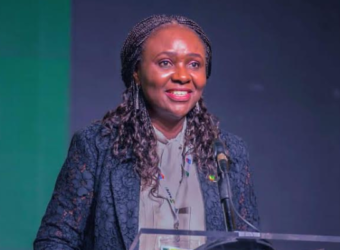
The programme includes a welcoming address by Director-General Ngozi Okonjo-Iweala, a ministerial dialogue on why AI is a trade policy issue, a fireside chat with private-sector leaders, and a keynote address from a high-level executive.
Several panel discussions will examine AI’s role in reducing trade costs, supporting developing economies’ participation in the AI value chain, enabling digital trade through services, promoting innovation through intellectual property, and exploring the role of standards. The event will also feature an exhibition and a pitching session showcasing case studies of AI in trade.
The post AI may increase global GDP by 13%, trade 37% by 2040 – WTO appeared first on The Sun Nigeria.
![]()