VIDEO: Ogogo’s body buried in Ogun
Read More: https://punchng.com/video-ogogos-body-buried-in-ogun/
![]()
Read More: https://punchng.com/video-ogogos-body-buried-in-ogun/
![]()
The federal government has intensified efforts to strengthen geoscientific data, exploration, and professional skills to unlock Nigeria’s mineral wealth and drive growth in the mining sector.
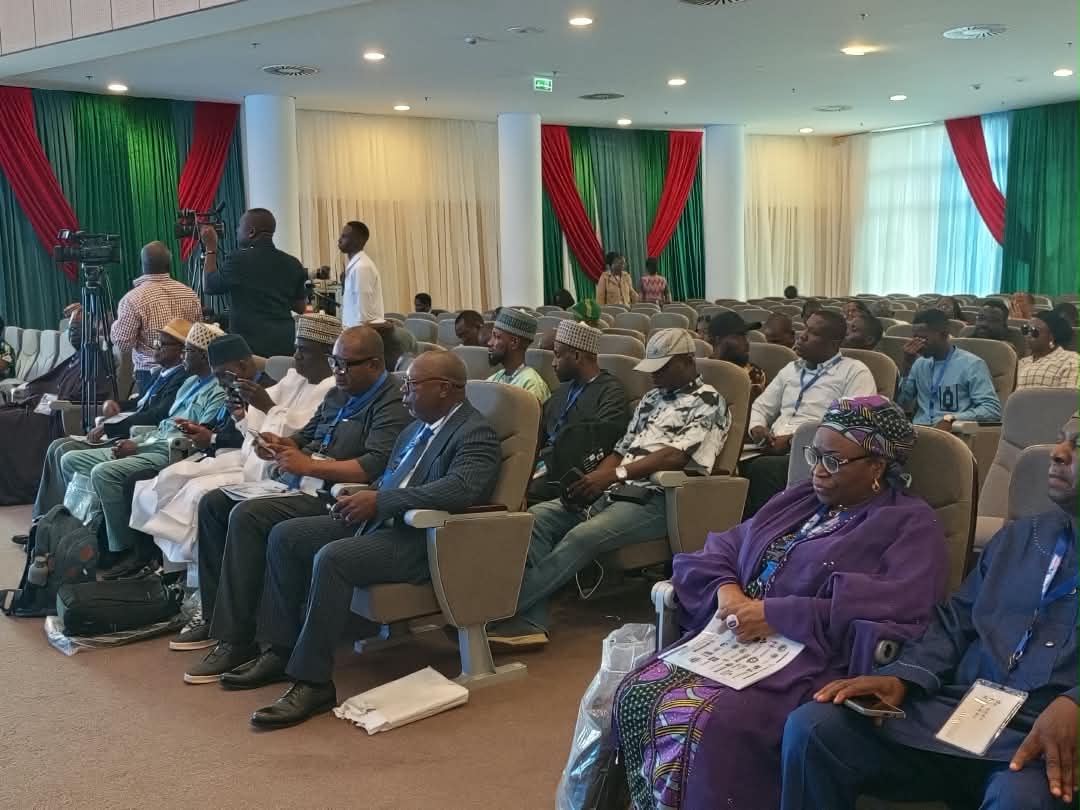
Minister of Solid Minerals Development Dr Dele Alake disclosed this on Monday at the 4th Annual International Conference and Training Workshop of the Nigerian Association of Exploration Geophysicists (NAEG) in Abuja.
The conference, themed “Geophysics: A Critical Driver in Resource Exploration, Environmental Management and Infrastructural Development,” brought together professionals and stakeholders in the geosciences and mining sectors.
Alake, represented by the Director of Planning and Special Projects at the Nigerian Geological Survey Agency (NGSA), Hadiza Godi, said geophysics remained critical to discovering Nigeria’s underground resources, protecting the environment, and providing reliable data for infrastructure development.
He said the Federal Government, through the NGSA, had expanded geological mapping and high-resolution airborne geophysical surveys, resulting in the identification of deposits of lithium, graphite, copper, manganese, rare earth elements, iron, lead, zinc and aluminium.
According to him, the government is also digitising geological archives and upgrading data management platforms to improve access to geological and geophysical information.
He said the move would reduce investment risks, promote transparency and attract more investors to the mining sector.
The minister further declared that Nigeria’s era of exporting raw mineral ores was gradually coming to an end, stressing that the government was encouraging mining companies to establish processing facilities locally.
He said local processing would retain more value in the country, create jobs and strengthen domestic supply chains.
Alake also commended NAEG for making technical training a key component of its annual conference, saying practical training would bridge the gap between classroom knowledge and industry demands.
Speaking earlier, NAEG President Akin George said the association had continued to promote professional development through training in geophysical data acquisition, processing, and interpretation.
He disclosed that the 2026 programme introduced artificial intelligence into the interpretation of exploration geophysical data.
George, however, called for a national conservation policy for strategic mineral resources, warning that Nigeria could lose valuable deposits if minerals continued to be extracted and exported without consideration for future generations.
He urged the government to identify and conserve strategic and high-grade deposits, particularly lithium, chromite, and other critical minerals that could become scarce and expensive to import in future.
The NAEG president commended the Ministry of Solid Minerals Development and the Mining Cadastre Office for promoting local value addition through the establishment of mineral processing plants.
He said such facilities would create jobs and strengthen the national economy.
Also speaking, the Executive Secretary of the Petroleum Technology Development Fund (PTDF), Prof Shehu Ahmed, represented by the Manager, Research and Innovation, Mr Wasiru Ahmed, pledged continued support for NAEG’s indigenous capacity-building initiatives through training, research, knowledge transfer and mentorship.
Former Minister of Mines and Steel Development, Prof Musa Sada, urged professionals to embrace continuous learning, noting that technology and professional practices were constantly evolving.
Similarly, President of the Nigerian Mining and Geosciences Society, Rose Chundung Ndong, and President of the Miners Association of Nigeria, Dele Ayanleke, pledged stronger collaboration among professional bodies.
The NGSA also urged NAEG to support efforts to properly archive exploration data, samples, drill logs and technical reports for research and national development.
The conference featured tributes to chairman of the NAEG Board of Trustees, Prof Deborah Ajakaiye, for her pioneering contributions to geophysics and the training of generations of Nigerian geoscientists.
Participants were also urged to embrace emerging technologies, particularly artificial intelligence, to strengthen mineral exploration and Nigeria’s geoscience sector.
The post FG moves to unlock mineral wealth with adequate geoscientific data, skills appeared first on The Sun Nigeria.
![]()
Read More: https://punchng.com/uefa-sets-september-2-deadline-for-champions-league-squad-registration/
![]()
Read More: https://punchng.com/2027-amnesty-boss-urges-iyc-to-mobilise-support-for-tinubus-re-election/
![]()
Read More: https://punchng.com/kremlin-threatens-to-destroy-ukraine-missile-plants-over-uk-support/
![]()
Read More: https://punchng.com/grow-thick-skin-to-survive-fame-says-timi-dakolo/
![]()
Read More: https://punchng.com/police-will-not-be-intimidated-ig-vows-as-force-honours-fallen-officers/
![]()
Nigerians may soon pay more for beer as rising tax bills and high energy costs put pressure on the country’s major breweries.
Nigerian Breweries Plc, Guinness Nigeria Plc and International Breweries Plc recorded a combined N112.87 billion in tax expenses in the first half (H1) of 2026, up from N71.39 billion in the same period of 2025. This represents an increase of about 58 per cent.
The increase came as the companies continued to battle high electricity, gas, diesel, transportation and other operating costs.
The rising expenses could make it harder for the brewers to continue absorbing higher production costs, raising the possibility that some of the burden could eventually be passed on to consumers through higher beer prices.
Financial results filed with the Nigerian Exchange Limited (NGX) showed that the three companies recorded stronger profit before tax (PBT) during the period. However, higher tax charges reduced the amount of profit left after tax.
Nigerian Breweries recorded the highest tax expense at N63.37 billion, compared with N43.83 billion in H1 2025.
Its profit before tax increased by 18.2 per cent year-on-year (y/y) to N156.33 billion, while profit after tax rose by only 5.1 per cent to N92.95 billion.
The company’s effective tax rate also increased to 40.5 per cent from 33.1 per cent a year earlier.
Guinness Nigeria recorded a tax expense of N13.03 billion, up from N7.32 billion in H1 2025.
Its profit before tax rose to N38.34 billion from N23.83 billion, while profit after tax increased to N25.30 billion from N16.51 billion.
Its effective tax rate rose to 34 per cent from 30.7 per cent.
International Breweries recorded a tax expense of N36.47 billion, compared with N20.24 billion in the previous year.
The company’s profit before tax increased to N74.79 billion from N61.53 billion.
However, it recorded a loss after tax of N38.31 billion, against a profit of N41.29 billion in H1 2025.
Its effective tax rate also climbed to 48.8 per cent from 32.9 per cent.
The figures show that while the breweries’ businesses performed better before tax, higher tax charges and other costs significantly affected their final earnings.
However, the N112.87 billion tax expense should not be taken to mean that the three companies paid N112.87 billion in cash to the Federal Government during the period.
Tax expense is an accounting figure that can include both current and deferred tax. For instance, Nigerian Breweries reported cash tax paid of N14.32 billion during the period, far below its N63.37 billion tax expense.
For consumers, the bigger concern may therefore be the combined effect of taxes and rising energy and distribution costs.
Brewing is a power-intensive business. Breweries need electricity, gas, diesel and other energy sources to keep their factories running. Higher energy prices therefore increase the cost of making beer and can also push up transportation and distribution costs.
The situation is coming at a difficult time for the industry as breweries try to recover sales volumes in a market where consumers are becoming increasingly sensitive to price increases.
Nigerian Breweries’ results illustrate the challenge. Its revenue increased by 8.9 per cent to N803.68 billion in H1 2026, while its gross and earnings before interest, tax, depreciation and amortisation (EBITDA) margins improved.
However, operating costs remained high, particularly selling and distribution expenses, as the company spent more on distribution, advertising and trade incentives to attract customers, support sales and protect its market share.
Analysts at Cordros Research said the breweries’ earnings remained exposed to several risks despite expectations of improved tax and foreign exchange conditions.
“However, elevated energy costs, which should keep distribution expenses under pressure, alongside sustained trade incentive spending to defend market share and a softer-than-expected volume recovery, remain the key risks to the breweries’ outlook,” the research firm said.
The warning suggests that beer prices could come under fresh pressure if energy and other operating costs remain high.
Higher beer prices could also put additional pressure on household budgets, particularly as consumers already face rising costs of food, transportation and other basic needs. Some consumers may respond by buying cheaper brands, reducing consumption or switching to alternatives.
Earlier in the year, the breweries announced price increases on some of their products, citing the prevailing economic conditions and rising costs of doing business.
The International Monetary Fund (IMF), in its Article IV assessment of Nigeria, had also warned that higher food and transport costs could weigh on economic activity and increase inflationary pressure.
However, the rising tax burden also highlights the Federal Government’s need to increase revenue to fund public services and infrastructure.
Minister of Finance and Coordinating Minister of the Economy, Taiwo Oyedele, has repeatedly argued that stronger government revenue would provide more money for infrastructure, electricity, transportation and other public services.
If such investments improve power supply, roads and other infrastructure, manufacturers could eventually benefit from lower operating costs.
For now, however, breweries are caught between rising costs and consumers who are becoming less able to absorb further price increases.
With taxes, energy, distribution and other expenses all putting pressure on their businesses, the key question is how much of the additional cost the companies can continue to absorb.
If the pressure persists, the cost could move down the supply chain, from breweries to distributors and retailers, and eventually reach consumers.
For beer drinkers, that could mean paying more for their favourite brands in the months ahead if breweries decide that absorbing the rising cost of taxes, energy and logistics is no longer sustainable.
The post Beer prices may rise as brewers battle N113bn H1 tax bill, higher energy costs appeared first on The Sun Nigeria.
![]()
The federal government is stepping up efforts to reduce Nigeria’s dependence on foreign digital infrastructure, approving two new communication satellites while revealing that more than N3.8 trillion has been invested in information technology infrastructure since 2023.
The Federal Executive Council (FEC) approved the acquisition and deployment of two next-generation satellites, NIGCOMSAT-2A and NIGCOMSAT-2B, as part of efforts to expand Nigeria’s digital capacity and strengthen its technological independence.
The satellites will be deployed by Nigeria Communications Satellite Limited (NIGCOMSAT), with the project expected to improve broadband internet, broadcasting, enterprise connectivity and critical government communications, particularly in areas where conventional telecom infrastructure is difficult or costly to deploy.
NIGCOMSAT’s Acting Head of Corporate Affairs, Stephen Kwande, disclosed the FEC approval, which moves the project into the next stage of implementation.
The satellites are expected to extend connectivity to underserved, unserved and hard-to-reach communities while improving the resilience of Nigeria’s communications infrastructure.
They will also support digital services in education, healthcare, agriculture, financial services and government operations, as well as provide more secure communications for critical national needs, including security and defence.
NIGCOMSAT Managing Director and Chief Executive Officer, Jane Nkechi Egerton-Idehen, said the project would reduce Nigeria’s dependence on external satellite infrastructure while creating new opportunities across the satellite and digital technology value chain.
She said the opportunities would span telecommunications, broadcasting, ground infrastructure, systems integration, technical support and satellite-enabled services.
The project is also expected to strengthen local expertise through knowledge transfer, professional training and the development of skills in satellite engineering, network operations and cybersecurity.
The satellites will be delivered by Thales Alenia Space of France and Israel Aerospace Industries (IAI), while NIGCOMSAT will lead implementation in collaboration with the Federal Ministry of Communications, Innovation and Digital Economy and other relevant agencies.
The government is targeting the launch of NIGCOMSAT-2A in 2028 and NIGCOMSAT-2B in 2029.
The satellite project comes as the government moves to build greater domestic capacity across other areas of the digital economy, including cloud computing and data centres.
Meanwhile, the Director-General of the National Information Technology Development Agency (NITDA), Kashifu Inuwa, disclosed that the Federal Government had invested more than N3.8 trillion in IT infrastructure between 2023 and 2026.
“Based on data from 2023 to date, the government invested over N3.8 trillion in IT infrastructure,” Inuwa said in an interview with TVC News.
He said the scale of spending presented an opportunity for the government to redirect more of its technology expenditure towards developing local infrastructure and reducing duplication across ministries, departments and agencies.
“Imagine channeling that investment into building local capacity,” he said.
As part of the strategy, the Federal Government has adopted a Cloud-First policy, under which ministries, departments and agencies (MDAs) will be discouraged from building separate data centres and server rooms.
Instead, government agencies are expected to move towards shared cloud infrastructure, which NITDA believes could improve efficiency and reduce repeated investments in technology.
“The government has agreed to adopt a Cloud-First strategy, meaning MDAs will be discouraged from building standalone data centers or server rooms and required to move to the cloud,” Inuwa said.
He stressed that the strategy was not aimed at shutting Nigeria off from foreign technology providers but at encouraging them to establish infrastructure within the country.
“The initiative is not about Nigeria closing its doors against foreign technologies, but asking them to come and build with us,” he said.
The government’s push for greater control of its digital infrastructure has intensified with several recent initiatives.
NITDA finalised a data classification framework in February 2025 to support cloud adoption and strengthen data governance, while the Central Bank of Nigeria in June 2026 directed banks, fintechs and other payment-system operators to host payment transaction data generated in Nigeria within the country by January 1, 2027.
NITDA also signed a Sovereign Cloud Framework in August, while the Federal Government unveiled a National Digital Cloud Policy aimed at increasing cloud adoption and attracting investment.
On August 21, NITDA and the Budget Office launched a Joint Technical Committee to develop the fiscal, procurement and investment structures needed to implement the National Sovereign Cloud Initiative.
The twin push for satellite and cloud infrastructure reflects a broader government strategy to keep more of Nigeria’s digital operations and spending within the country, while attracting international technology companies to build and invest locally.
With demand rising from fintech, artificial intelligence, telecommunications and other digital services, the government hopes the investments will not only improve connectivity and data security but also create jobs, build technical expertise and reduce Nigeria’s reliance on infrastructure located outside its borders.
The post FG targets digital independence, spends N3.8trn on IT appeared first on The Sun Nigeria.
![]()
Africa is set to intensify its push for greater control of its critical minerals wealth as the Africa Minerals Strategy Group (AMSG) convenes a high-level summit in New York next month.
The Third AMSG High-Level Roundtable on Critical Minerals Development in Africa is scheduled for September 21, 2026, in Manhattan, New York, on the sidelines of the 81st United Nations General Assembly.
The meeting, themed “From Resources to Wealth: Continental Cooperation for Mineral Value Addition,” will bring together African Heads of State and Government representatives, ministers, global investors, development finance institutions, and major players in mining, technology, processing, logistics and mineral traceability.
President Bola Tinubu, who is also Chairperson of the AMSG General Assembly, is expected to chair the roundtable, underscoring Africa’s renewed determination to place critical minerals at the centre of its industrial and economic agenda.
Critical minerals such as lithium, copper, cobalt, graphite, manganese and rare earth elements have become increasingly important to electric vehicles, renewable energy, advanced manufacturing, artificial intelligence, defence and other strategic industries.
Despite possessing some of the world’s largest deposits of these resources, Africa has for decades exported much of its minerals in raw form, with limited processing and value addition taking place on the continent.
AMSG said the pattern must change, stressing the need for African countries to move beyond the traditional extract-and-export model.
The New York meeting will focus on building integrated mineral value chains, attracting transformative capital, strengthening continental cooperation and ensuring that African countries secure a larger share of the wealth generated from their mineral resources.
The roundtable will also advance the implementation of the Mutual Assured Development (MADE) Framework, launched at the African Natural Resources and Energy Investment Summit (AFNIS) 2026 in Abuja.
A major highlight of the meeting will be the unveiling of the Continental Integration and Economic Assurance Declaration (CIEAD), which AMSG says will provide a new framework for continental cooperation in critical minerals.
The declaration is expected to address policy coordination, investment mobilisation, mineral value addition, supply-chain security and mechanisms for strengthening Africa’s bargaining power in the global minerals economy.
AMSG will also propose a CIEAD Finance Window aimed at developing innovative financing structures to mobilise capital for mineral processing, infrastructure, technology and other components of Africa’s emerging mineral value chains.
The roundtable will be convened by AMSG leadership, with the participation of the Minister of Solid Minerals Development, Dele Alake, who chairs the AMSG Ministerial Steering Committee, and AMSG Secretary-General, Moses Micheal Engadu.
Representatives of AMSG member states, multilateral organisations and development finance institutions, including the Africa Finance Corporation, are expected at the gathering.
Executives from major global mining, technology, mineral traceability and logistics companies will also participate.
According to AMSG, the gathering is designed to bridge the gap between policymakers, financiers and private-sector players seeking secure and sustainable supplies of critical minerals.
The group said the meeting would focus on practical and bankable opportunities rather than declarations, with discussions expected to centre on policy alignment, investment structures and projects capable of converting Africa’s mineral wealth into measurable economic benefits.
AMSG said the stakes go beyond mining, as the global race for critical minerals is reshaping economic and geopolitical relationships.
It noted that the transition to electric mobility, renewable energy, advanced manufacturing, digital infrastructure, artificial intelligence and modern defence systems had intensified competition for secure mineral supplies.
The group said Africa must seize the opportunity to use its mineral endowment to drive manufacturing, technology transfer, infrastructure development, regional trade and job creation.
It stressed that the continent must move from being a source of raw materials for industries abroad to becoming an active architect of the emerging global minerals economy.
Established in January 2024 by African governments as a continental intergovernmental organisation and specialised agency for critical minerals development, AMSG coordinates critical-minerals policy, investment alignment, minerals security and Africa’s engagement with global partners.
The post African leaders move to take control of critical minerals wealth appeared first on The Sun Nigeria.
![]()